In hydraulic repair and manufacturing facilities, bench labour and turnaround speed dictate profitability. Yet, the traditional rebuild cycle regularly stalls before a wrench is even picked up. Technicians and procurement teams lose billable hours cross-referencing seal profiles, chasing individual component suppliers, and rectifying mismatched machining tolerances. Standardising on ready-to-assemble, complete cylinder kits replaces multi-vendor fragmentation with a streamlined, repeatable assembly process that directly reduces workshop overhead.
Eliminating Multi-Vendor Sourcing Bottlenecks with Complete Cylinder Kits
The conventional approach to cylinder repair requires sourcing discrete parts from different vendors. A repair shop might rely on multiple purchase orders for a single build, meaning project completion is tied to the slowest supplier. A single backordered seal kit or delayed end cap halts the entire bench assembly, creating workshop floor congestion and pushing out client delivery dates.
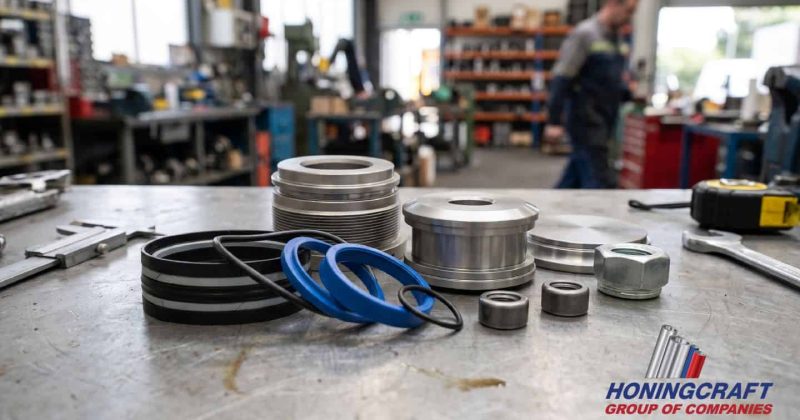
Single boxed complete cylinder kits containing all critical hardware, such as a precision-machined gland, piston, port fittings, static and dynamic seals, end caps, and lock nuts, consolidate procurement into a single line item. This approach eliminates administrative churn and transit delays, ensuring that work can begin as soon as the materials arrive on the shop floor.
Managing different supplier accounts introduces invisible administrative waste that rarely appears on the bill of materials. Buyers must process separate requisitions, track different shipping dates, handle diverse freight surcharges, and match incoming items against multiple invoices. When an error occurs, such as a missing seal or an incorrect thread profile, procurement staff must spend further time coordinating returns and warranty claims across distinct organisations. By turning six separate supply transactions into one packaged delivery, accounts payable overhead is sharply reduced. In addition, warehouse personnel spend less time unboxing, sorting, tagging, and cross-checking loose parts from different freight carriers. Having every necessary component physically present in one labelled package guarantees that a job scheduled for bench assembly can be executed from start to finish without interruption.
Slashing Bench Preparation and Machining Rework
Technicians often spend considerable bench time modifying off-the-shelf components to work together. This might involve trimming or shimming mismatched glands and pistons, re-machining seal grooves that do not match the specified cross-section, or cleaning and chasing threads on non-standardised ports and lock nuts.
Because pre-packaged, complete cylinder kits are engineered as integrated systems, every component is manufactured to complementary tolerances. Gland rod guides align accurately with piston lands, and seal glands are pre-cut to exact depths. Technicians transition straight from unboxing to lubrication and assembly, cutting preparation and fitting time significantly per cylinder.
When technicians are forced to alter parts on manual lathes or milling machines, valuable bay hours are consumed by remedial tasks rather than profitable builds. Secondary machining also introduces inconsistent clearances, increases surface roughness, and risks invalidating component warranties. Removing the requirement for corrective adjustments preserves the structural geometry of the alloy and prevents localised stress risers around seal lips and threads. Assembly benches remain clean, organised, and dedicated solely to component fitting and torqueing, shortening total cycle time and letting artisans focus on precision assembly rather than ad-hoc fabrication.
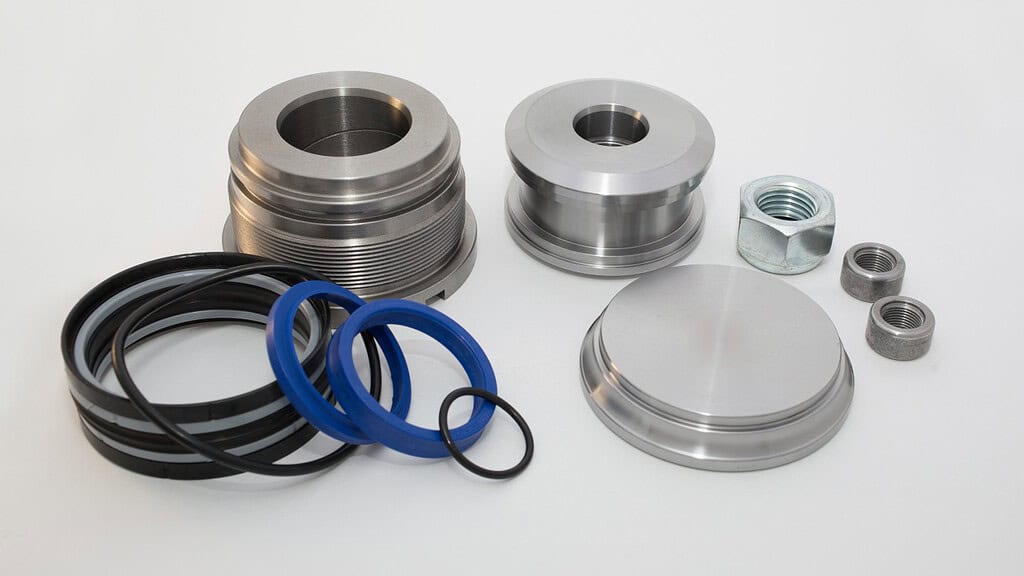
Complete Cylinder Kits Mitigate Assembly Errors and Field Failures
Human error during component selection is a major driver of costly rework and warranty claims in a busy workshop. A technician might install an imperial O-ring into a metric groove, resulting in dynamic extrusion under pressure. Alternatively, an incorrect seal durometer or cross-section can lead to premature bypass leaks on the test bench, while misidentifying thread pitch on ports risks stripping cylinder barrel housings.
Complete, ready-to-assemble cylinder kits eliminate guesswork by pairing the exact static O-rings, rod seals, wipers, and piston rings certified for that specific cylinder bore and rod diameter combination. Ensuring full compatibility out of the box prevents failed bench tests and costly field callouts, protecting both your margins and your reputation for quality.
Field breakdowns cause significant disruption for commercial clients in earthmoving, mining, manufacturing, and transport. An in-service hydraulic leak due to an undersized wiper or a poorly matched piston guide band can cause fluid contamination, high operating temperatures, and bore scoring. These avoidable mechanical failures lead to unscheduled downtime, emergency site callouts, and steep warranty repair expenses for the workshop. Standardised kits ensure that elastomers, backup rings, and metal surfaces are pre-selected to handle cyclic system pressures and thermal loads reliably. This engineering consistency establishes predictable cylinder lifecycles and eliminates post-installation callbacks.
Transforming the Workshop Floor Through Standardisation
Adopting complete cylinder kits transforms cylinder repair from an unpredictable, ad-hoc job into an efficient assembly line. Facilities can maintain standard shelf stock of high-turnover metric and imperial sizes to enable same-day breakdown repairs. Furthermore, standardising work instructions allows technicians to work with unified kit diagrams, which speeds up onboarding for junior mechanics.
Maintaining organised inventory also becomes vastly simpler with integrated complete cylinder kits. Instead of tracking thousands of individual O-rings, bearings, retainers, and fittings across bins, parts managers monitor clean SKU levels based on bore and rod dimensions. This inventory clarity prevents capital from being tied up in dead stock, such as loose components left behind from cancelled custom builds. Standardised packaging streamlines storage footprint, simplifies regular cycle counts, and ensures rapid picking when urgent repairs arrive on short notice. Ultimately, workshops establish a scalable operating environment where turnaround times are dependable, material wastage is controlled, and overall customer satisfaction remains consistently high.
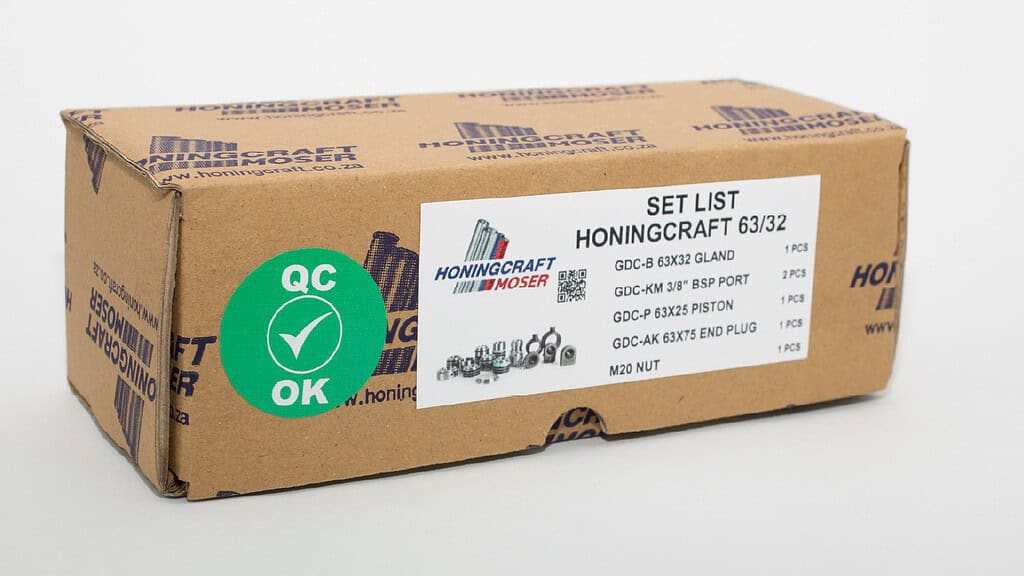
By avoiding the hidden costs of piecemeal purchasing and iterative machining, workshops can protect their billable margins and complete more cylinder overhauls per bay each week. Contact Honingcraft today to discuss how our complete cylinder kits can support your manufacturing and repair operations.