
In heavy-duty manufacturing and industrial repair, structural integrity is non-negotiable. Whether you are dealing with earthmoving machinery in a Gauteng mine or heavy conveyor rollers on a production line, hydraulic cylinder failure can cause costly operational delays. One of the most frequent points of failure in custom engineering stems from choosing the wrong production method for thick-walled components. When a hydraulic system is subjected to extreme internal pressures, slight concentricity deviations or hidden material stress points can result in micro-cracks, fluid bypass, or catastrophic barrel distortion.
For engineers, workshop managers, and industrial builders, sourcing dependable raw materials capable of withstanding these high-pressure cycles is an ongoing challenge. The solution lies in how the internal channels of these components are machined. Standard machining practices often fail to meet the rigorous demands of hydraulic systems, making deep hole drilling vital.
The Technical Reality of Deep Hole Drilling in Hydraulic Manufacturing
Creating an accurate, straight hole through a solid piece of steel becomes increasingly complex as the channel depth increases. In the engineering sector, a hole is classified as a deep hole when its depth-to-diameter ratio exceeds 10:1. Traditional twist drill bits cannot operate at these depths because they struggle with heat buildup and cannot clear metal chips effectively from the cutting zone.

To overcome these challenges, specialised deep hole drilling techniques utilise advanced systems such as gun drilling and Boring and Trepanning Association (BTA) tooling. Unlike standard machinery, these systems pump high-pressure cutting fluids directly through the centre of the tool string to cool the cutting edge continuously. This pressurised fluid forces the metal chips out along the external flutes of the tool, preventing binding and tool breakage.
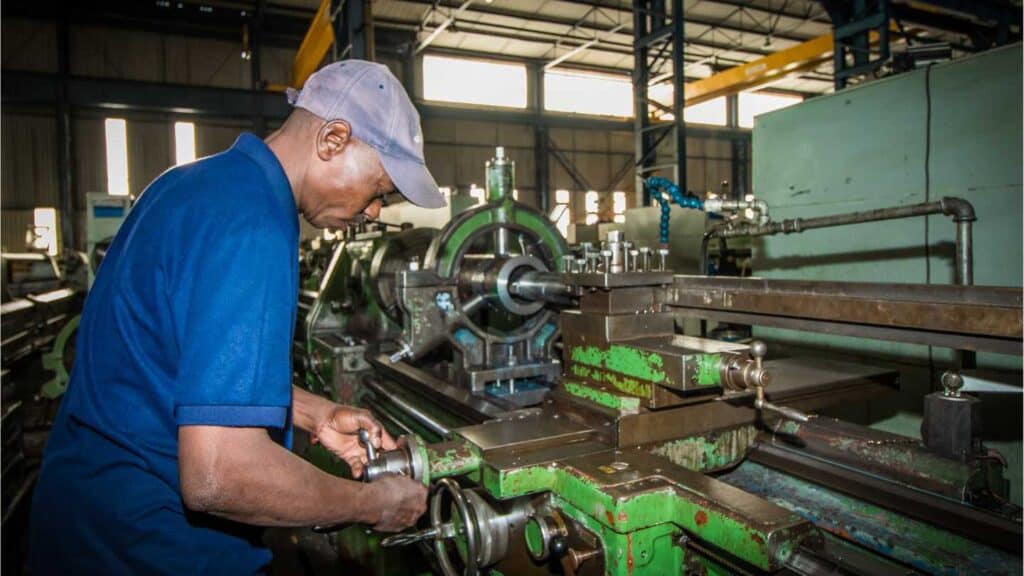
At Honingcraft, our specialised machinery can process solid steel round bars up to 600 millimetres in diameter and up to 4 metres in length. By controlling chip evacuation and mechanical heat generation, we maintain high straightness and tight geometric tolerances over long distances, ensuring the internal bore remains perfectly parallel to the external surface of the bar.
Solid Bar Processing vs. Seamless Tubing
When choosing raw materials for thick-walled hydraulic cylinder barrels, manufacturing operations usually choose between seamless mechanical tubing or machining a solid steel round bar. While seamless tubing is suitable for standard, low-pressure applications, it presents significant limitations when applied to specialised engineering environments.

Seamless tubes are manufactured through hot-rolling and piercing processes, which can introduce subtle variations in wall thickness and concentricity across the length of the tube. When exposed to extreme internal pressures, these thin sections act as weak spots.
In contrast, utilising deep hole drilling to remove the core of a solid steel round bar billet offers superior mechanical reliability:
- Material Uniformity: Solid round bars are less prone to internal structural voids and material defects compared to mass-produced hollow sections.
- Thick-Walled Integrity: Deep hole drilling allows you to select from a wide variety of readily available solid steel grades, enabling the production of ultra-thick walls capable of managing extreme hydrostatic pressure.
- Concentric Alignment: Machining from a solid bar ensures that the bore centreline aligns precisely with the outer diameter, minimising piston guide wear and seal friction.
Enhancing Longevity and Performance
Investing in precision machining yields long-term financial and operational benefits. When a hydraulic cylinder barrel is drilled with high concentricity, the internal piston travels along a perfectly straight path. This uniform movement reduces uneven friction on specialised polyurethane and rubber seals, preventing premature fluid leaks and pressure drop failures.
Furthermore, solid-bore components provide superior structural stiffness, preventing the barrel from expanding or ballooning under sudden hydraulic shock loads.

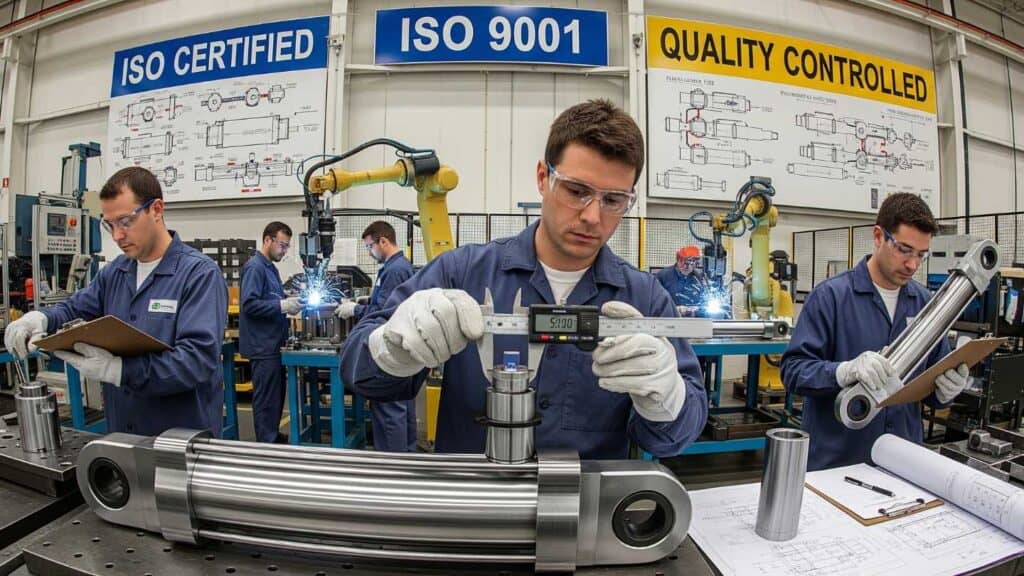
To achieve optimal performance, deep hole drilling must be combined with high-precision internal finishing. At our 10,000 m² factory in Wadeville, Germiston, our machining processes are closely integrated with our precision honing department. After a solid bar is drilled, our heavy-duty horizontal honing machines refine the inside diameter to an H8 surface tolerance. This multi-stage approach ensures a smooth, cross-hatched finish that retains oil effectively, lowering friction and extending the operating lifespan of the entire hydraulic assembly.
Sourcing Engineering Solutions in South Africa
Sourcing heavy industrial components in the local market requires an engineering partner with deep technical capability and robust supply chains. Honingcraft maintains strong partnerships with a reliable network of domestic steel merchants, ensuring an extensive stock of precision steel bars is always available. Whether your project requires custom conveyor rollers, dynamometer rolls, or heavy industrial cylinders, our facility handles the entire process under one roof, from raw steel selection to final surface treatment.
Do not risk your equipment uptime on subpar materials or imprecise machining. To find out more about how we can support your manufacturing workflow, visit our dedicated service page for deep hole drilling. If you have an upcoming project with specific dimensional requirements, contact the technical sales team at Honingcraft today to submit your engineering drawings or request a technical quote.